A garage door spring can break without warning. One moment your garage door works normally. The next, it refuses to open or suddenly feels much heavier than usual.
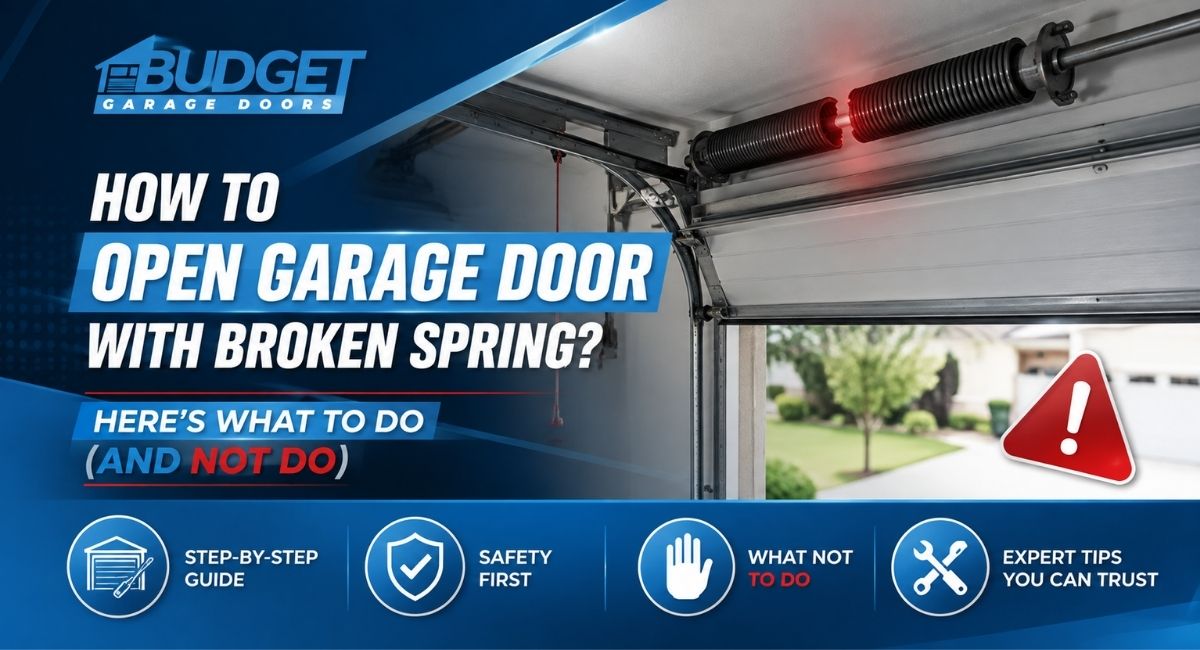
If your garage door spring breaks, opening the door safely becomes the immediate concern. Here’s how to open a garage door with a broken spring while minimizing the risk of injury or additional damage.
The answer depends on the type of spring, the weight of your garage door, and whether the door is already open or closed. In some situations, you may be able to move the door manually with assistance. In many others, forcing it open can damage the door, the opener, or cause a serious injury.
This guide explains exactly how to open a garage door with a broken spring, how to tell which spring has failed, what you should never do, and why replacing a broken spring is usually the safest solution. You will also learn about repair costs, spring lifespan, and practical maintenance tips that can help reduce future failures.
Why a Broken Garage Door Spring Is a Serious Problem
Garage door springs do much more than lift the door.
They store mechanical energy that counterbalances the full weight of the garage door. Without working springs, the garage door opener is not designed to lift the door on its own.
Most residential garage doors weigh between 130 and 300 pounds. Some insulated steel or custom wood doors weigh even more.
When a spring breaks:
- The door becomes extremely heavy.
- The opener experiences excessive strain.
- The cables may lose proper tension.
- The door may become uneven.
- Manual lifting becomes difficult or impossible.
Ignoring a broken spring often leads to additional repairs that cost much more than replacing the spring itself.
How to Tell If Garage Door Spring Is Broken
Before attempting anything, confirm that the spring is actually the problem.
Here are the most common signs.
1. You Heard a Loud Bang
Many homeowners describe it as sounding like a gunshot inside the garage.
That noise usually happens when a snapped spring suddenly releases stored energy.
2. The Door Will Not Open
The opener may try to lift the door.
Instead, it struggles, stops halfway, or reverses.
3. The Door Feels Extremely Heavy
Disconnect the opener only if it is safe to do so.
A properly balanced garage door should lift with moderate effort.
If it suddenly feels almost impossible to lift, the spring has likely failed.
4. Visible Gap in the Spring
For Torsion springs, a broken spring often has a noticeable gap of several inches where the metal snapped.
This is usually the easiest visual confirmation.
5. Crooked Garage Door
If one spring fails on a two-spring system, one side may lift higher than the other.
This uneven movement puts stress on the tracks and cables.
6. Loose Cables
Broken springs reduce cable tension.
You may notice cables hanging loosely near the sides of the door.
Types of Garage Door Springs
Understanding your spring system helps explain why opening the door safely depends on the type of spring installed.
Torsion Springs
Torsion springs are mounted above the garage door opening on a metal shaft.
They use rotational force to lift the door smoothly.
Advantages include:
- Longer service life
- Better balance
- Smoother operation
- More reliable performance
Most newer homes use torsion spring systems.
Extension Springs
Extension springs are installed along the horizontal tracks on each side of the garage.
They stretch as the door closes and contract as it opens.
Although generally less expensive, they usually wear out sooner than torsion systems.
If you have extension springs, you may eventually need extension spring repair or complete spring replacement after years of use.
Can You Open a Garage Door With a Broken Spring?
Yes, but only under limited circumstances.
Opening the door manually should be treated as an emergency measure rather than a normal solution.
If:
- the door is lightweight,
- the tracks are undamaged,
- the cables remain intact,
- two strong adults are available,
it may be possible to lift the door carefully.
However, if the door feels unstable, binds in the tracks, or has damaged cables, stop immediately and contact a professional.
How to Open Garage Door With Broken Spring Safely
If you absolutely must access your garage before repairs are completed, follow these steps carefully.
Step 1. Disconnect the Garage Door Opener
Pull the emergency release cord.
This disconnects the opener carriage from the garage door.
Never attempt this while the door is partially open and unstable.
Step 2. Check the Tracks
Inspect both vertical tracks.
Look for:
- bent sections
- debris
- damaged rollers
- loose hardware
Track damage makes manual lifting much more dangerous.
Step 3. Get Help
Never lift a heavy garage door alone.
Two adults should lift evenly from both sides.
Keep fingers away from panel joints.
Step 4. Lift Slowly
Lift with your legs rather than your back.
Avoid jerking motions.
If the door suddenly becomes uneven, lower it carefully.
Step 5. Secure the Door
Once open, clamp locking pliers beneath the bottom rollers on both tracks.
This prevents the door from unexpectedly falling.
Never trust the opener to hold the weight.
Step 6. Lower Carefully
When finished, remove the clamps.
Lower the door slowly with assistance.
Avoid letting the door slam shut.
What NOT to Do
Many expensive repairs begin with well-intentioned mistakes.
Avoid these actions.
Never Use the Garage Door Opener Repeatedly
The opener motor is not designed to replace the lifting force provided by springs.
Repeated attempts often burn out the motor or damage the drive system.
If your opener struggles, stop immediately.
If your opener has also begun malfunctioning, reading about garage door opener repair in Florida can help you understand common issues before they become major failures.
Never Replace Torsion Springs Without Training
A tension spring stores tremendous energy.
Improper handling can cause severe injuries.
Professionals use specialized spring winding bars and precise winding techniques.
Improvised tools such as screwdrivers should never replace proper winding bars.
Never Remove Cables
Garage door cables remain under tension.
Removing them incorrectly can create dangerous whipping action.
Never Stand Under a Damaged Door
If one spring has broken, the remaining hardware may also be stressed.
The door could suddenly fall.
Never Force the Door
Forcing the door damages:
- rollers
- hinges
- opener gears
- tracks
- panels
Repair costs increase quickly.
Why Springs Break
Garage door springs wear out naturally.
Each opening and closing counts as one cycle.
Manufacturers rate springs by their spring life cycle.
Typical ratings include:
| Spring Type | Average Cycle Rating | Estimated Lifespan |
| Standard torsion spring | 10,000 cycles | 7 to 10 years |
| High cycle torsion spring | 20,000 to 30,000 cycles | 12 to 18 years |
| Premium commercial springs | 50,000+ cycles | Much longer |
Frequent daily use shortens spring life significantly.
Factors That Shorten Spring Life
Several conditions reduce spring lifespan.
Rust
Rust increases friction between spring coils.
Lubricating springs several times each year helps reduce corrosion.
Poor Maintenance
Loose hardware and dry rollers increase strain on the entire lifting system.
Routine garage door maintenance in Palm Springs can identify worn components before they cause larger problems.
Incorrect Spring Size
Using undersized springs places extra stress on the system.
Professional installers calculate spring size based on:
- door weight
- door height
- drum size
- cable length
Frequent Daily Use
Families using the garage as the primary entrance may cycle the door eight or more times daily.
Higher-cycle springs often provide better long-term value.
Garage Door Spring Cost
One of the first questions homeowners ask concerns pricing.
Actual garage door spring cost depends on several factors.
| Factor | Effect on Cost |
| Spring type | Torsion systems generally cost more |
| Number of springs | Two spring systems require matching replacements |
| Door size | Larger doors require heavier springs |
| Labor | Varies by region and complexity |
| Emergency service | Same day or after-hours service may cost more |
Although replacing one spring may seem cheaper, professionals often recommend replacing both springs on a dual-spring system.
Since both springs have experienced similar wear, replacing both helps maintain balanced lifting and reduces the chance of another breakdown shortly afterward.
Should You Replace Only One Spring?
Sometimes yes.
Often no.
If:
- one spring is brand new,
- the second spring recently failed because of physical damage,
replacing only one may be reasonable.
However, if both springs are the same age, replacing both usually provides:
- balanced lifting
- longer reliability
- reduced future labor costs
Real World Example
A homeowner leaves for work early Monday morning.
The garage door opener hums but the door barely moves.
After several attempts, the opener stops completely.
Inspection reveals a two-inch gap in the torsion spring above the door.
Instead of forcing the opener again, the homeowner disconnects the opener, confirms the cables remain in place, and with another adult carefully lifts the door just enough to move the vehicle outside.
The door is lowered immediately afterward.
A technician replaces both torsion springs later that afternoon, balances the door, lubricates the hardware, and tests opener performance.
The opener survives because it was not forced to lift the full weight repeatedly.
Can You Drive Away With the Garage Door Open?
If you have safely secured the garage door in the fully open position using locking pliers or proper supports, you may temporarily move your vehicle.
However:
- avoid leaving the garage unattended for extended periods
- repair the spring as soon as possible
- do not continue using the opener
DIY Versus Professional Spring Repair
Many homeowners enjoy DIY projects.
Garage door spring replacement is different.
Professionals receive specialized training for:
- spring measurement
- torque calculation
- safe winding
- cable adjustment
- door balancing
Improper installation may damage the opener, cables, bearings, or tracks.
If you need garage door spring repair, professional technicians have the proper tools and replacement parts to complete the repair safely.
What If the Door Will Not Close After the Spring Breaks?
Sometimes spring is not the only issue.
Modern garage doors include safety systems that prevent closing when something is wrong.
If your garage door refuses to close even after addressing obvious problems, this guide explains several possible causes: Why Won’t My Garage Door Close?
Preventing Future Spring Failures
Routine care extends spring life.
Simple maintenance includes:
- lubricate springs every six months
- inspect cables regularly
- tighten loose hardware
- keep tracks clean
- schedule annual professional inspections
- test door balance periodically
Preventive maintenance costs far less than emergency repairs.
When You Should Call a Professional Immediately
Stop troubleshooting and request service if you notice:
- broken torsion spring
- hanging cables
- bent tracks
- damaged rollers
- door stuck halfway
- opener smoking
- door falling rapidly
- multiple broken components
These situations require proper tools and experience.
Professional technicians can safely restore balance and verify that the opener, cables, drums, bearings, and tracks remain in good condition.
If your entire system shows signs of wear beyond the springs, a complete garage door repair service in Apopka and across Florida may be the most practical solution.
What Homeowners Ask About Broken Garage Door Springs
Can I open a garage door with one broken spring?
Sometimes, but only with caution and usually with help from another adult. The door will be much heavier than normal and may become unbalanced.
How dangerous is a broken garage door spring?
Very dangerous. Springs store significant mechanical energy. Attempting repairs without the proper tools can result in serious injury.
How long does a garage door spring last?
Most standard springs last about 10,000 cycles. High-cycle springs can last 20,000 cycles or more, depending on usage and maintenance.
Will my garage door opener still work with a broken spring?
The opener may try to lift the door, but it is not designed to support the full door weight. Continued use can damage the motor and drive components.
How do I know whether I have torsion or extension springs?
Torsion springs are mounted above the garage door on a metal shaft. Extension springs run along the horizontal tracks on each side of the door.
Should both garage door springs be replaced at the same time?
In most cases, yes. If both springs are the same age, replacing both provides better balance and reduces the chance of another failure in the near future.
Final Thoughts
A broken garage door spring is more than an inconvenience. It affects the safety, balance, and reliability of your entire garage door system. While it is sometimes possible to open the door manually in an emergency, it should only be done with caution, proper assistance, and only if the door can be moved safely.
Avoid forcing the opener, attempting to wind springs without the correct spring winding bars, or working around damaged cables and hardware. These actions often turn a simple spring replacement into a much more expensive repair.
If you suspect a broken spring, arrange for professional service as soon as possible. Prompt repairs help prevent damage to your opener, tracks, rollers, and panels while restoring safe operation.
For fast, dependable assistance, Budget Garage Doors offers same day garage door spring repair and complete garage door services. Whether you need emergency spring replacement, system inspection, or a full repair, experienced technicians can diagnose the issue, restore proper door balance, and get your garage door operating safely again.