A garage door that refuses to close is more than an inconvenience. It leaves your home exposed, interrupts your routine, and often creates unnecessary stress when you’re trying to leave for work or secure your property at night.
If you’re asking why won’t my garage door close, the good news is that many problems have straightforward causes. Sometimes it’s a blocked safety sensor. Other times it’s a track problem, incorrect opener settings, damaged hardware, or a failing remote control. The challenge is identifying the real issue before replacing parts that aren’t actually broken.
Modern garage doors include multiple safety systems designed to prevent injuries and property damage. These systems work together every time you press the wall button or remote. When one component detects something unusual, the opener intentionally stops the closing cycle or reverses the door.
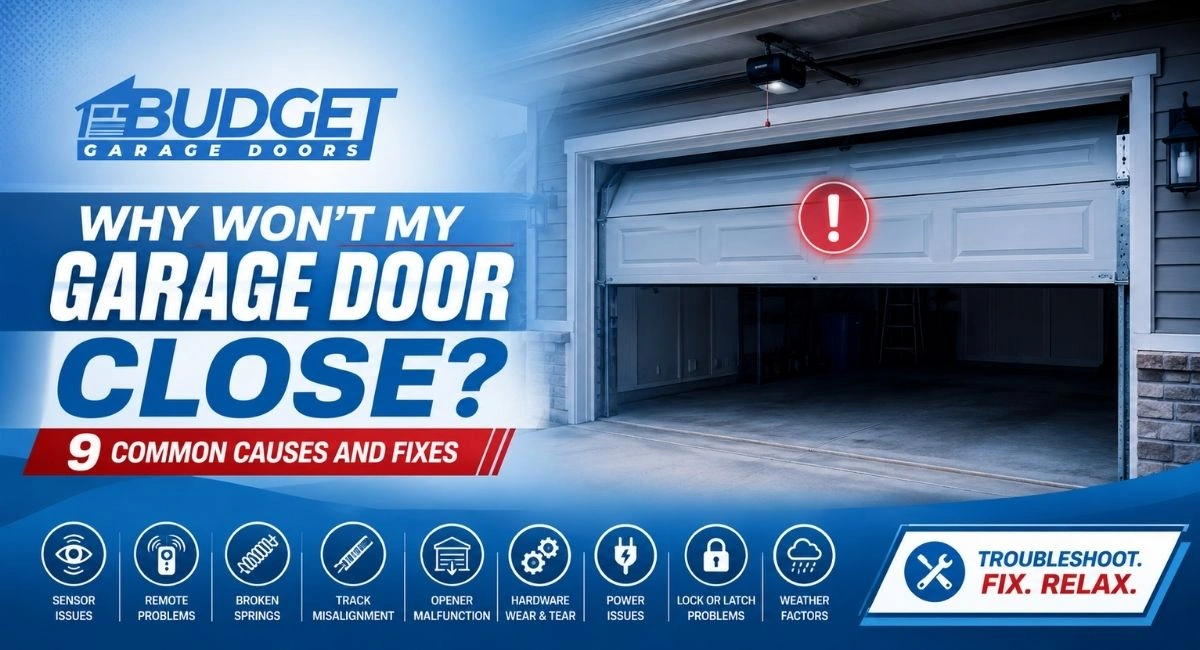
This guide explains the 9 most common reasons a garage door won’t close, practical troubleshooting steps you can safely perform, and situations where professional repair is the safest option. Whether your garage door won’t shut, reverses halfway, or you’re wondering why my garage door won’t close all the way, you’ll have a clear process to narrow down the cause.
How a Garage Door Closing System Works
Before troubleshooting, it helps to understand what happens every time your garage door closes.
Several components communicate with each other during operation:
- Garage door opener
- Safety sensors
- Door tracks
- Rollers
- Springs
- Cables
- Limit settings
- Remote transmitter
- Wall control
The opener constantly monitors the safety sensors, obstruction detection system, motor resistance, and reverse mechanism. If anything appears unsafe, the opener immediately stops or reverses the door.
Popular manufacturers such as Chamberlain, LiftMaster, and Genie all use similar safety technology, although programming and indicator lights vary slightly between models.
1. Garage Door Safety Sensors Are Misaligned
The most common reason a garage door won’t close is a garage door sensor issue.
The photo eyes sit near the bottom of both tracks. One sensor sends an invisible infrared beam while the other receives it.
If the beam becomes interrupted, the opener assumes something is in the doorway and refuses to close.
Signs of sensor misalignment
- Door starts closing then reverses
- Opener lights flash
- Sensor LED blinks
- Door closes only when holding the wall button
- Remote no longer closes the door
This is usually a photo eye alignment problem.
How to fix it
- Check both sensors.
- Remove dust and cobwebs.
- Wipe lenses with a soft cloth.
- Make sure both sensors face each other.
- Tighten loose mounting brackets.
- Verify indicator lights remain solid.
Real example
A homeowner stored a rake beside the garage wall. The handle lightly bumped one sensor every time lawn equipment was moved. The sensor shifted only a few millimeters, yet that was enough to interrupt the beam.
The repair took less than five minutes.
2. Something Is Blocking the Door
The opener depends on reliable obstruction detection.
Even a small object can prevent safe closing.
Common obstructions include:
- Children’s toys
- Trash cans
- Garden tools
- Bicycle tires
- Packages
- Leaves
- Dirt buildup
- Ice accumulation
- Pet bowls
Sometimes nothing appears obvious until you inspect the full opening carefully.
Florida homeowners may also notice sand, mulch, storm debris, or heavy rain runoff creating temporary obstructions near the bottom seal.
Always clear the doorway completely before moving to more complicated troubleshooting.
3. Dirty or Damaged Photo Eyes
Even if the sensors remain aligned, dirty lenses can interrupt communication.
Dust, pollen, insects, spider webs, fertilizer residue, and grass clippings frequently build up around sensor lenses.
Cleaning the sensors
Use:
- Microfiber cloth
- Soft cotton cloth
- Mild glass cleaner sprayed onto the cloth, never directly onto the sensor
Avoid abrasive cleaners because they may scratch the lens.
Inspect wiring while cleaning. Loose wires or damaged insulation can also interrupt the signal.
4. Bent or Damaged Garage Door Tracks
The tracks guide the rollers throughout the entire opening and closing cycle.
Even a slight bend may prevent smooth movement.
Symptoms
- Door jerks while closing
- Grinding noises
- Rollers leave the track
- Door stops halfway
- Uneven movement
Common causes
- Vehicle impact
- Loose mounting bolts
- Rust
- Accidental ladder contact
- Foundation movement
Never hammer tracks back into place without understanding the correct alignment. Improper adjustments often make the problem worse.
If you notice damaged tracks, professional garage door repair in Apopka, FL and nearby areas is usually the safest solution.
For homeowners dealing with recurring track problems, routine garage door maintenance in Florida helps identify loose hardware before it causes expensive damage.
5. Incorrect Limit Settings
Many homeowners overlook opener limit settings.
These settings tell the opener exactly where the door should stop.
If they drift out of adjustment, several problems may occur.
Symptoms
| Problem | Possible Cause |
| Door reverses before touching floor | Close limit set too high |
| Door pushes into floor then reverses | Close limit too low |
| Door never fully closes | Incorrect travel adjustment |
| Door bounces upward | Travel limit needs recalibration |
Modern LiftMaster, Chamberlain, and Genie openers include adjustment screws or digital programming depending on model.
Always consult the owner’s manual before changing travel limits.
Changing settings too aggressively can damage the opener or place unnecessary strain on the motor.
6. Remote Control Problems
Sometimes the garage door works perfectly from the wall button but not from the remote.
This usually points toward a transmitter problem rather than the door itself.
Common remote issues
- Dead batteries
- Lost programming
- Signal interference
- Damaged buttons
- Water damage
- Worn circuit board
Troubleshooting
Replace batteries first.
If the remote still fails:
- Reprogram it
- Test from different distances
- Remove nearby wireless devices temporarily
- Check antenna position on the opener
If multiple remotes suddenly stop working, the opener itself may require diagnosis.
For opener-related issues, professional garage door opener repair in Orlando across Florida often saves time compared to replacing random components.
7. Broken Springs or Cable Problems
Garage door springs carry most of the door’s weight.
When one breaks, the opener struggles to move the door safely.
Signs include:
- Loud bang from garage
- Crooked door
- Heavy manual lifting
- Door stops during travel
- Visible gap in torsion spring
Never attempt spring replacement yourself.
Garage door springs remain under extreme tension and require specialized tools.
If you suspect spring failure, schedule garage door spring repair in Florida immediately.
8. Worn Rollers or Hardware
Garage doors contain hundreds of moving parts.
Over time, rollers wear out, hinges loosen, and fasteners gradually shift.
Warning signs
- Squeaking
- Grinding
- Door shakes
- Rollers wobble
- Door moves unevenly
Regular lubrication helps, but worn hardware eventually requires replacement.
Annual inspections significantly reduce unexpected failures.
9. Opener Motor or Logic Board Failure
When everything else appears normal, the opener itself may have developed an electrical problem.
Possible causes include:
- Aging motor
- Burned circuit board
- Internal gear wear
- Power surge damage
- Capacitor failure
Symptoms often include:
- Motor hums without movement
- Random operation
- Flashing diagnostic lights
- Door stops unexpectedly
Most modern openers provide error codes through flashing LEDs.
Refer to your manufacturer’s manual for interpretation.
Troubleshooting Checklist
Before scheduling service, work through this checklist.
| Check | Action |
| Sensors | Clean and align both photo eyes |
| Tracks | Inspect for bends or debris |
| Doorway | Remove all obstructions |
| Remote | Replace batteries |
| Wall button | Test operation |
| Rollers | Look for visible damage |
| Springs | Check for gaps or breaks without touching them |
| Power | Confirm opener has electricity |
| Limit settings | Verify travel adjustments |
If these steps don’t solve the problem, further diagnosis is usually required.
Why Garage Doors Reverse Before Closing
Many homeowners believe something is broken when the door closes almost completely before reversing.
Usually, the opener is doing exactly what it was designed to do.
The reverse mechanism activates when it detects:
- Increased resistance
- Sensor interruption
- Incorrect force settings
- Track binding
- Door imbalance
Never disable this feature.
It exists to prevent injuries and property damage.
When the Garage Door Only Closes While Holding the Wall Button
This symptom almost always indicates a garage door sensor issue.
Holding the wall button overrides the normal safety sensor check on many opener models.
If the door closes only while holding the button:
- Inspect sensors
- Check wiring
- Verify alignment
- Remove obstructions
Do not continue using the override as a permanent solution.
Why My Garage Door Won’t Close All the Way
If you’re wondering why my garage door won’t close all the way, several issues may be responsible.
Common causes include:
- Incorrect close limit
- Bent tracks
- Roller obstruction
- Sensor interruption
- Worn springs
- Bottom seal catching on debris
Start with the simplest inspections before adjusting opener settings.
Preventive Maintenance Tips
Many closing problems develop gradually.
Routine maintenance helps prevent unexpected failures.
Every three to six months:
- Clean sensor lenses.
- Tighten visible hardware.
- Lubricate rollers and hinges.
- Inspect weather seals.
- Test door balance.
- Check track cleanliness.
- Verify sensor alignment.
- Listen for unusual sounds.
Scheduling periodic garage door maintenance also extends opener life and improves safety.
When DIY Stops Being Safe
Some repairs should never become weekend projects.
Avoid repairing:
- Broken torsion springs
- Lift cables
- Bent shafts
- Opener circuit boards
- Major track damage
These components involve high tension or electrical hazards.
Professional technicians have specialized tools, replacement parts, and experience diagnosing problems quickly.
If the door appears crooked or unusually heavy, stop operating it immediately.
Why Professional Diagnosis Saves Money
Many homeowners replace remote batteries, sensors, or even the opener before discovering the actual problem was a bent track or worn roller.
Professional inspection identifies the root cause first.
An experienced technician checks:
- Door balance
- Spring tension
- Sensor calibration
- Opener diagnostics
- Track alignment
- Roller condition
- Safety system operation
That often prevents unnecessary parts replacement.
If you need reliable garage door repair, scheduling service early can also prevent additional damage caused by continued operation.
Common Questions About Garage Doors That Won’t Close
Why won’t my garage door close with the remote but works with the wall button?
Can dirty sensors stop a garage door from closing?
How do I know if my garage door sensors are aligned?
Why does my garage door go down then back up?
Should I adjust garage door springs myself?
How often should garage doors be serviced?
Final Thoughts
A garage door that refuses to close is often warning you about a safety issue rather than simply malfunctioning. In many cases, cleaning and aligning the safety sensors, removing obstructions, replacing remote batteries, or checking the tracks will restore normal operation. More serious issues, such as broken springs, damaged tracks, failing openers, or electrical faults, require professional attention to avoid further damage or injury.
If your troubleshooting does not resolve the problem, or your garage door continues reversing, making unusual noises, or refusing to close completely, it is time to have it inspected by an experienced technician.
Budget Garage Doors provides professional same day garage door repair in Altamonte Springs FL and nearby communities in Florida, opener diagnostics, spring replacement, sensor alignment, track repairs, and preventive maintenance. Prompt service helps restore your garage door’s safety, security, and reliable operation so you can get back to your day with confidence.