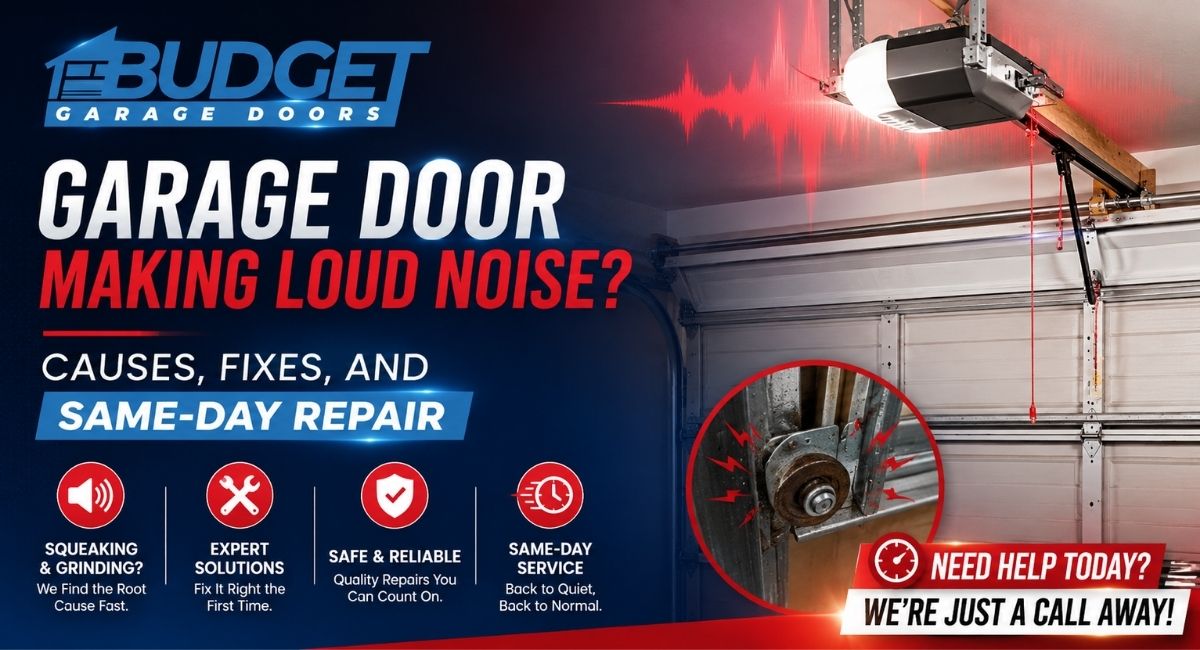
A garage door making loud noise usually has a mechanical problem that should not be ignored. Squeaking often points to dry rollers or hinges. Grinding can indicate worn rollers or track problems. Rattling may come from loose hardware, while a sudden pop can signal a spring issue.
The fastest way to diagnose the problem is to identify what the noise sounds like, where it comes from, and when it occurs.
Some problems, such as lubrication, sensor cleaning, and removing obstructions, are suitable for basic homeowner maintenance. Spring, cable, track, and major opener repairs should be handled by a professional.
Why Is My Garage Door Making a Loud Noise?
Garage doors rely on rollers, tracks, hinges, springs, cables, and an opener to move correctly. Wear, friction, loose hardware, debris, or misalignment can make the system noisy.
Common causes include:
- Dry or worn rollers
- Worn hinges
- Dirty or damaged tracks
- Loose hardware
- Opener chain problems
- Damaged opener components
- Sensor obstruction or misalignment
- Broken or failing springs
- Door sections rubbing against each other
The sound provides the first clue.
A squeak usually points to friction. A grinding noise suggests wear or rubbing. A loud pop can indicate a high-tension component such as a spring. A rattle often points to loose hardware or vibration.
Start With the Sound: What Is Your Garage Door Telling You?
Before touching anything, listen carefully.
A garage door does not need to be silent to be healthy. Older doors naturally produce some mechanical noise. What matters is a new, unusually loud, worsening, or irregular sound.
| Sound | Common causes | DIY inspection | Professional attention |
|---|---|---|---|
| Squeaking | Dry hinges, rollers, bearings | Yes | If noise persists |
| Grinding | Worn rollers, track issues, opener components | Visual inspection | Often |
| Rattling | Loose hardware, panels, tracks | Yes | If structural |
| Popping | Spring or tension-related problems | Visual only | Yes |
| Banging | Broken spring, cable, or door movement | Stop operation | Yes |
| Scraping | Track obstruction, bent track, door rubbing | Visual inspection | If damaged |
| Humming | Opener or electrical issue | Basic checks | Often |
| Repeated clicking | Remote, sensor, or opener control issue | Yes | If unresolved |
The sound alone cannot confirm the failed component. Use it as the starting point for inspection.
How to Fix a Noisy Garage Door
Start with a visual inspection. Do not immediately remove parts or adjust the spring system.
Check the door’s path for objects, inspect the visible tracks, look at the rollers and hinges, and listen carefully while the door operates.
If the problem is minor, basic maintenance may solve it. If the door is crooked, unusually heavy, or making a severe grinding or popping sound, stop operating it and arrange professional repair.
Garage Door Squeaking: Check Rollers and Hinges
Garage door squeaking is commonly caused by dry rollers, hinges, or bearings.
Inspect the rollers for cracks, excessive movement, or visible wear. Nylon rollers can become damaged over time, while steel rollers may become noisy when their bearings wear out.
Nylon rollers are generally quieter than basic steel rollers, making them a popular choice when reducing garage door noise is a priority.
Next, inspect the hinges between the door sections. A dry hinge can produce squeaking or clicking as the door moves.
If the manufacturer’s instructions allow it, apply a small amount of appropriate garage door lubricant to the recommended moving points.
Do not coat the tracks with lubricant.
If the squeak continues after lubrication, the component may be worn rather than simply dry.
Garage Door Grinding Noise: Check the Rollers and Tracks
A garage door grinding noise deserves more attention than a minor squeak.
Grinding can come from a worn roller bearing, damaged roller, bent track, misaligned track, or door section rubbing against another surface.
Listen to determine where the sound starts.
If the grinding comes from the sides of the door, inspect the rollers and tracks. If it comes from the ceiling-mounted opener, the opener’s drive system may be responsible.
Do not force a door through a section where it binds.
A damaged or severely bent track should be repaired or replaced by a garage door professional rather than hammered back into position.
Garage Door Lubrication: Use the Right Product
Proper garage door lubrication can reduce friction and help prevent some squeaking.
Follow the manufacturer’s instructions and lubricate only components designed for lubrication, such as appropriate roller bearings, hinges, and other specified moving parts.
A garage door-specific lubricant is generally preferable to using a general-purpose product everywhere.
Is WD-40 good for garage doors?
WD-40 is useful for several household applications, but it is not automatically the best lubricant for every garage door component.
If you need a WD-40 alternative, choose a lubricant specifically intended for garage doors and follow the manufacturer’s recommendations.
More lubricant is not better. Excess product can attract dust and debris.
Check the Garage Door Tracks
The tracks guide the rollers as the door opens and closes.
Inspect both tracks for obvious debris, dents, bends, loose mounting hardware, or visible misalignment.
A small obstruction can create scraping or rattling. A damaged track can cause grinding, binding, or uneven movement.
Do not adjust a severely damaged track yourself.
If a vehicle has hit the track or the door is repeatedly coming out of the track, stop using the door and call a professional.
Check for Loose Hinges and Hardware
Loose hardware can cause rattling and vibration.
Inspect accessible hinges, brackets, and mounting hardware. If a component is visibly loose and safely accessible, it may be possible to tighten it with the correct tool.
Do not remove or adjust hardware connected to springs, cables, or bottom brackets.
These components can be under significant tension.
If you notice a damaged hinge, replace it rather than forcing it back into shape.
Is the Garage Door Opener Making the Noise?
Sometimes the door is not the problem. The opener is.
If the door moves relatively smoothly when operated manually but becomes noisy when the opener runs, inspect the opener system.
A chain-drive opener can naturally make more noise than a belt-drive model. However, a suddenly loud opener chain, grinding motor, excessive vibration, or unusual clicking may indicate a maintenance or repair issue.
Do not over-tighten the opener chain.
If the noise appears to come from inside the opener, professional garage door opener repair in Altamonte Springs and other areas in Florida is the safer option.
Check for Sensor Obstructions and Misalignment
Garage door safety sensors can cause operating problems when they are blocked or misaligned.
The sensors are normally located near the bottom of the garage door tracks.
Make sure nothing is blocking the sensor path. Clean the lenses gently and check that both sensors face each other.
Sensor misalignment usually causes the door to refuse to close or reverse after starting downward. It is not normally the cause of a mechanical grinding sound.
Never bypass the safety sensors.
If the door continues reversing after basic sensor checks, have the opener system inspected.
Can a Remote Cause Garage Door Problems?
Yes.
A weak remote battery, stuck button, damaged remote, or smart-home control issue can cause unexpected opener behavior.
Replace an old remote battery and test the wall control.
If the wall control works normally but the remote does not, the remote may be the problem.
If the opener activates unexpectedly or multiple controls behave incorrectly, professional diagnosis may be necessary.
What Does a Loud Popping Sound Mean?
A loud popping sound should not be treated like an ordinary squeak.
If the door suddenly makes a loud pop and becomes difficult or unusually heavy to lift, a broken garage door spring is one possible cause.
Do not adjust or replace a torsion spring yourself.
Garage door springs store significant energy and require specialized tools and procedures.
If you suspect spring failure, stop using the door and arrange garage door spring repair in Winter Park, FL.
You can also read about how to open a garage door with a broken spring if you need to understand the safety concerns before service.
When Should You Stop DIY Garage Door Repairs?
Basic cleaning, inspection, lubrication, and sensor checks are reasonable maintenance tasks.
Stop DIY troubleshooting if you encounter a broken spring, loose cable, severely bent track, damaged bottom bracket, crooked door, or door that suddenly becomes extremely heavy.
Do not adjust spring tension or attempt to repair cables.
If the opener has an electrical or internal mechanical problem, do not remove its housing unless you are qualified to do so.
A garage door is heavy, and its spring system can store substantial energy. A repair that looks simple can become dangerous when the wrong component is removed.
When Does a Noisy Garage Door Need Same-Day Repair?
A minor squeak may not require immediate service.
Same-day repair is more appropriate when the noise is accompanied by a safety or operating problem.
Contact a garage door professional if:
- The door suddenly becomes extremely heavy.
- A spring breaks.
- A cable comes loose.
- The door comes out of its track.
- The track is severely bent.
- The opener makes a loud grinding sound.
- The door becomes crooked or unstable.
- The door slams, falls, or will not operate normally.
For these problems, professional garage door repair is safer than repeated DIY attempts.
How to Make a Garage Door Quieter
A quieter garage door usually comes from keeping the entire system in good condition.
Quality nylon rollers can reduce roller noise. Proper lubrication can reduce friction at appropriate moving points. Healthy hinges allow the door sections to move smoothly. Properly aligned tracks keep rollers moving correctly.
The opener also matters. A belt-drive opener is generally quieter than a chain-drive design, although the right choice depends on the door and opener setup.
Replacing one component may not solve the problem if another component is causing the noise.
That is why diagnosis should come before replacement.
Commonly Asked Questions
How do I fix a noisy garage door?
Identify the type and location of the noise first. Check the rollers, hinges, tracks, door path, and accessible hardware. Apply appropriate garage door lubricant to approved moving parts if they are dry.
Grinding, popping, severe rattling, or unusual door movement requires professional inspection.
Why is my garage door squeaking?
Dry rollers, hinges, and bearings are common causes of squeaking. Appropriate lubrication may help if the components are otherwise in good condition.
If the sound continues, the component may be worn or damaged.
Why is my garage door making a grinding noise?
A grinding noise can indicate worn rollers, damaged bearings, track problems, door rubbing, or opener problems.
Determine whether the sound comes from the door or the opener before attempting a repair.
Are nylon rollers quieter than steel rollers?
Generally, yes. Nylon rollers can provide quieter operation than basic steel rollers. Their condition and bearing quality also affect noise.
Can I use WD-40 on my garage door?
It is better to use a lubricant designed for garage doors and approved for the specific component. Avoid spraying the tracks unless the manufacturer specifically recommends it.
Can I repair a garage door spring myself?
Spring repair is not recommended as a DIY job. Springs store substantial energy and require specialized tools and knowledge.
A broken spring should be handled by a qualified garage door technician.
Why is my garage door suddenly making a loud popping noise?
A sudden pop can come from several components, but a pop followed by an unusually heavy door can indicate spring failure. Stop operating the door and arrange professional inspection.
Final Takeaway
A noisy garage door is usually a symptom, not the actual problem.
Squeaking often points to dry or worn rollers and hinges. Grinding can indicate roller, track, or opener problems. Rattling may come from loose hardware. Popping, especially when followed by a heavy door, can indicate a spring issue.
Start with safe checks and basic maintenance. Do not adjust springs, cables, or other high-tension components yourself.
If your garage door is making a loud noise and the problem is getting worse, Budget Garage Doors can diagnose the cause and provide same-day garage door repair in Heathrow across Florida when available.
For routine upkeep, garage door maintenance can help identify worn components before they become larger problems.
If the door is already grinding, popping, crooked, or unsafe to operate, contact Budget Garage Doors garage door repair services rather than continuing to troubleshoot it yourself.